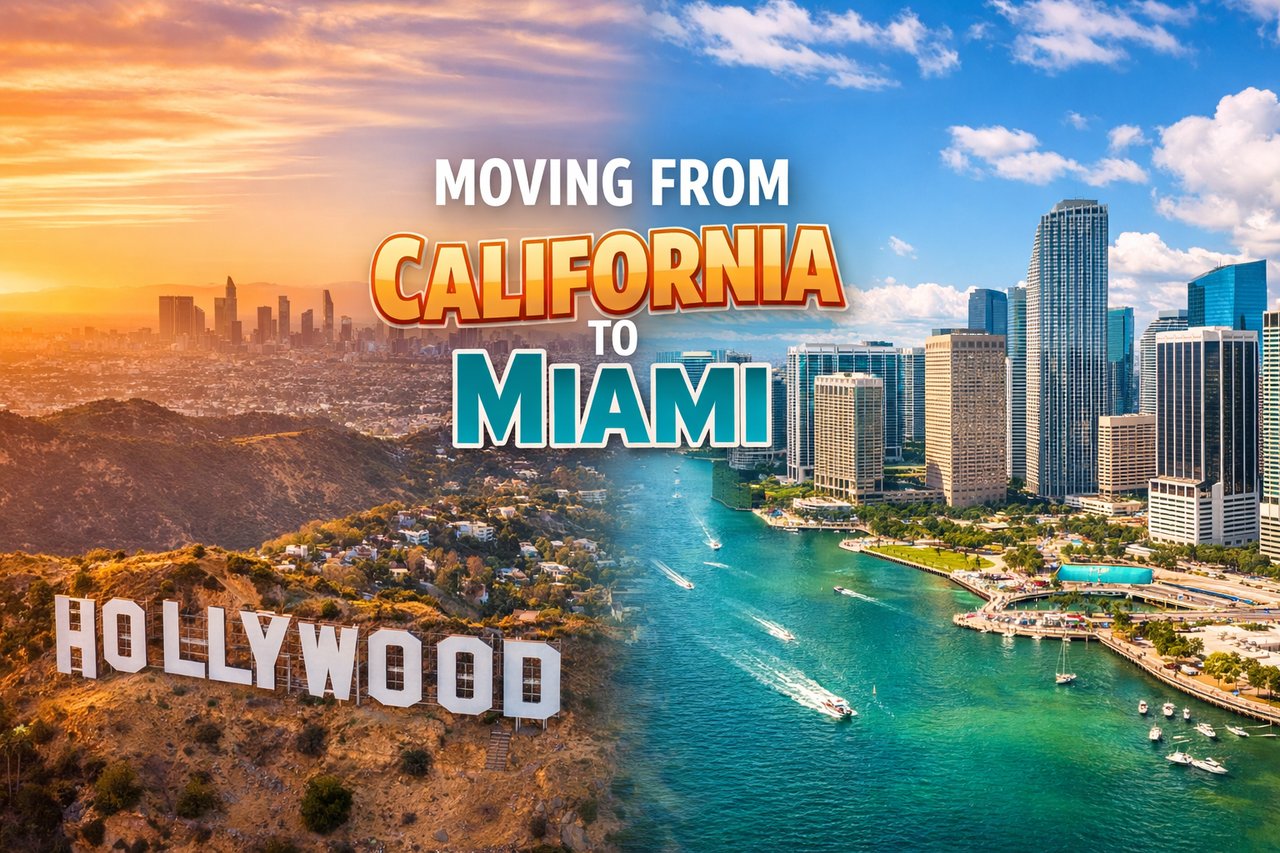
What Should I Know Before Moving from California to Miami?
For years, Californians have looked east with curiosity. More recently, that curiosity has turned into action. Los Angeles and San Francisco residents are increasingly considering Miami, drawn by tax advantages, warmer weather, international energy, and the promise of a different lifestyle.
But while the move from California to Miami can be rewarding, it is not a lateral move. It is a cultural, financial, and lifestyle shift. People who thrive after the relocation are usually the ones who understand what they are gaining and what they are giving up before they pack their bags.
This guide lays out what Californians should truly know before moving to Miami, beyond headlines and social media narratives.
Why Californians Are Looking at Miami
On paper, Miami checks many boxes Californians care about:
-
No state income tax
-
Warm weather year-round
-
Ocean access and outdoor living
-
A growing business and tech scene
-
Luxury real estate that still feels “early” compared to LA or SF
For many, the appeal is not just financial. It is psychological. Miami feels energetic, international, and socially alive in a way that some Californians feel their cities have lost.
That said, the people who struggle after the move are usually those who assume Miami is just “California with palm trees.” It is not.
Miami Is More International Than Most Californians Expect
One of the biggest adjustments for Californians is cultural.
Miami is not a typical American city. It is closer in energy to cities like São Paulo, Madrid, or Mexico City than to Los Angeles or San Francisco. Spanish is spoken everywhere. Many businesses operate bilingually. Social norms, communication styles, and expectations can feel very different.
This is not a negative, but it is something to understand upfront.
Californians who enjoy international travel, diverse cultures, and a fast-paced social environment tend to adapt quickly. Those who prefer quieter, more predictable social dynamics sometimes feel overwhelmed at first.
As someone who works with buyers in both California and Miami, I often tell clients: if you love the idea of living in a globally connected city, Miami will feel exciting. If you expect it to feel like Santa Monica or Marin County, you may be frustrated.
Cost of Living: Less Tax, Different Expenses
Many Californians move to Miami expecting an across-the-board reduction in expenses. The reality is more nuanced.
Yes, Florida has no state income tax. For high earners, that alone can be a major financial shift. However, Miami has its own cost structure that surprises newcomers.
Things that are often cheaper:
-
State income taxes (nonexistent)
-
Gas
-
Some service-based expenses
-
Certain luxury real estate compared to prime coastal California
Things that are often more expensive:
-
Property insurance
-
HOA fees in condos
-
Car insurance
-
Utilities, especially electricity in summer
-
New construction pricing in prime neighborhoods
Miami is not a “cheap city.” It is a city where money is allocated differently. People who plan properly benefit significantly. People who assume everything will cost less often feel caught off guard.
Weather Is a Bigger Lifestyle Factor Than People Realize
Most Californians focus on sunshine when they think of Miami. What they often underestimate is humidity.
Miami is hot and humid for a significant portion of the year. This affects:
-
How much time you spend outdoors
-
What kind of housing feels comfortable
-
How you plan your day
-
How you dress, exercise, and socialize
In California, the climate often fades into the background. In Miami, weather actively shapes your lifestyle.
That said, many Californians adjust better than expected, especially those who enjoy ocean access, boating, early mornings, and evening-focused social lives.
The key is to understand that Miami living is structured differently. Midday outdoor plans in August are unrealistic. Sunrise workouts and late dinners make much more sense.
Transportation and Walkability Are Neighborhood-Specific
Californians are used to long drives, but they are also used to choice. In Miami, your experience depends heavily on where you live.
Some neighborhoods offer walkability and density. Others are fully car-dependent. Public transportation exists but is limited compared to major West Coast cities.
This is where many relocations go wrong.
People choose a condo because it looks good online, only to realize later that daily life feels inconvenient. Neighborhood selection in Miami is not just about price and aesthetics. It is about how you want to live day to day.
Working with someone who understands neighborhood nuance matters more here than in many California markets.
The Real Estate Market Moves Differently
Miami real estate behaves differently than California real estate.
Inventory cycles are faster. International buyers play a larger role. Pre-construction is a major part of the market. Condo living is more normalized, even at high price points.
Californians often bring expectations that do not translate well, especially around:
-
Negotiation strategies
-
Inspection culture
-
HOA governance
-
New construction timelines
As someone who works in both markets, I often see California buyers either overestimate their leverage or hesitate too long in Miami. Both can be costly.
Miami rewards decisiveness and preparation.
Social Life Is More Front-Facing
One of the biggest lifestyle differences is how social life works.
Miami is outward-facing. People meet through events, restaurants, fitness studios, and social clubs. There is a strong emphasis on appearance, presence, and in-person interaction.
California, especially Northern California, tends to be more inward-facing and routine-based.
Some Californians thrive in Miami’s social environment. Others find it exhausting.
Understanding your own personality matters. Miami can be incredibly rewarding socially, but it asks you to show up.
Who Tends to Thrive After the Move
Based on years of working with Californians relocating to Miami, the people who tend to be happiest share a few traits:
-
Comfortable with change and ambiguity
-
Financially organized before the move
-
Curious about different cultures
-
Socially open and flexible
-
Realistic about tradeoffs
Those who struggle often moved for one reason only, usually taxes, without considering lifestyle fit.
First-Person Insight: The Mistake I See Most Often
As someone who works in both Los Angeles and Miami, the most common mistake I see is people choosing a property before they understand how they actually want to live in Miami.
They buy first. Then they adjust. That approach works in California. It often fails in Miami.
The clients who do best spend time here first, test neighborhoods, and ask uncomfortable questions about their habits, routines, and expectations.
Miami rewards intention.
Final Thoughts
Moving from California to Miami can be an upgrade, a reset, or a mistake, depending on how well it is planned.
The people who succeed are not the ones chasing headlines. They are the ones who understand that Miami is not better or worse than California. It is different.
Different pace. Different culture. Different rules.
If you approach the move with clarity and realism, Miami can offer a quality of life that feels fresh, exciting, and financially smart.
If you approach it assuming it will feel familiar, it likely will not.